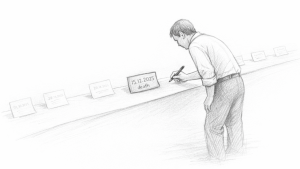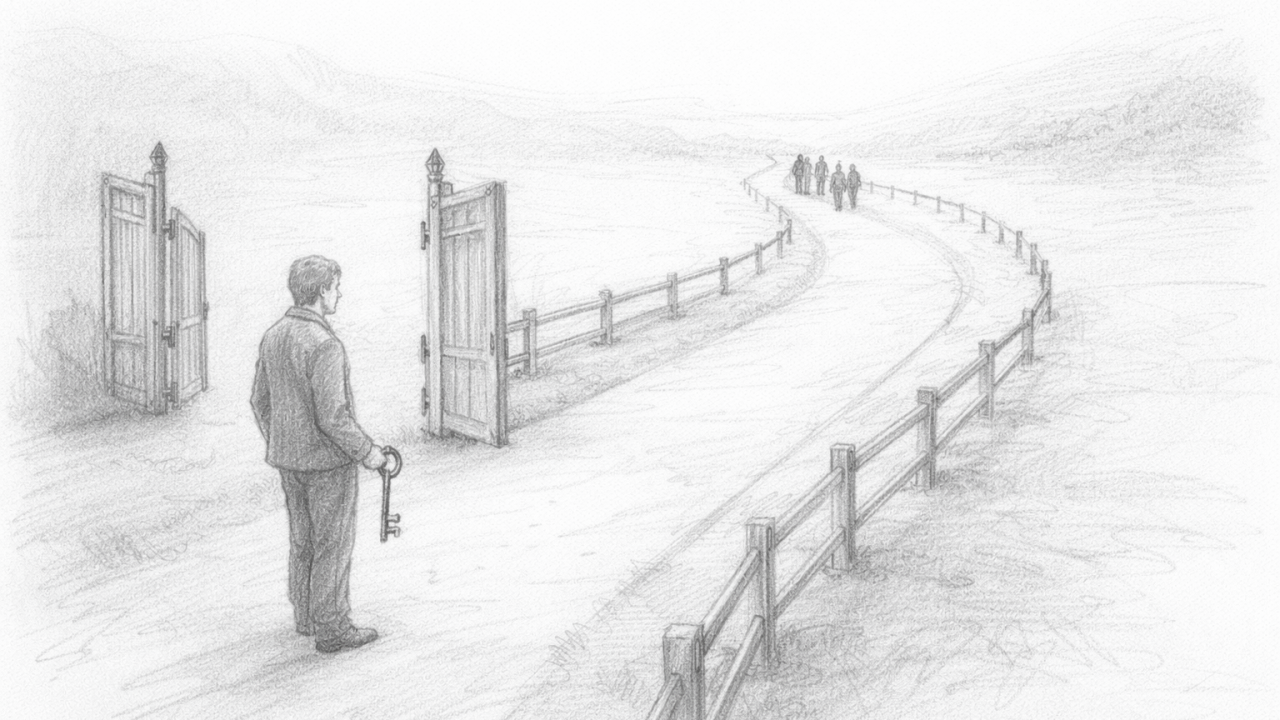
In my last post, I described how clarity can replace gatekeepers.
This time I want to stay with that thought and go one step further. What actually needs to change so that removing gatekeepers does not feel reckless?
In many organizations, gatekeeping is not driven by bad intent. It is often a response to something much simpler: unclear roles and blurred decision rights.
When nobody truly knows who is allowed to decide, someone will step in and “protect the system.” When responsibilities overlap, decisions get escalated. When accountability is vague, committees emerge. And once committees take over, ownership quietly dissolves.
In regulated environments like Life and Health, this dynamic becomes very visible. Product waits for architecture. Architecture waits for security. Security waits for compliance. Compliance waits for risk. Infra wants to review everything. PM wants to approve everything. Everyone participates. Nobody fully owns.
So what dissolves the gatekeeper role without compromising safety?
It starts with clarity. Clarity of responsibility. Clarity of decision rights. Clarity of scope.
When we model one business activity at the leaf level and align on it as a group, we are not only describing behavior. We are drawing boundaries. If the activity is “Cancel policy from inception before first premium collection,” then the lines become visible.
Business owns the rules. Engineering owns the implementation of the slices. QA owns verification against the explicitly defined scenarios. Compliance owns separation of duty validation based on activity-level permissions. Security owns the review of sensitive data exposure and critical paths. Platform or Infra owns the non-functional guarantees.
Each role has decision rights within its domain.
Not symbolic influence. Not implicit veto power. Real decision rights.
Once those rights are explicit, accountability stops being a problem. People are generally willing to carry responsibility when they are genuinely empowered to decide. What they resist is responsibility without authority.
Heavyweight processes often hide this imbalance. Instead of admitting that decision rights are unclear, organizations build architecture boards, steering committees, mandatory review forums, layered approval workflows. Decisions are “validated” by groups that are often too distant from the actual problem to fully understand it.
It feels safe. It looks controlled.
But it slowly erodes ownership.
When ten people approve something, no one truly stands behind it. And when something goes wrong, the answer becomes, “We all agreed.”
Safety does not come from multiplying approvals. It comes from making decision rights explicit and visible.
In our modelling workshops, we try to make this part of the conversation. Who decides this rule? Who is allowed to change it later? Who signs off? Who operates it? Who monitors it? When these questions are answered openly, the atmosphere changes. The need to guard the door weakens.
You no longer need PM to approve every detail if product boundaries and value criteria are clearly defined. You no longer need the infra or security team to act as default blockers if non-functional standards and security guardrails are transparent and agreed upon in advance.
The shift is subtle, but meaningful.
From gatekeeping to guardrails. From escalation to empowerment. From committees to accountable individuals.
It is not an easy shift. Especially for those whose influence has long been tied to being the final checkpoint.
But if we truly want clarity instead of gatekeepers, we have to acknowledge something simple.
Transparency without decision rights creates anxiety. Decision rights without clarity create chaos.
Both are needed.
I am curious how others experience this in regulated environments. Have you managed to reduce gatekeeping without increasing risk? Or do committees still serve as your primary safety mechanism?
Originally published on LinkedIn (2026-02-22): https://www.linkedin.com/pulse/from-gatekeepers-guardrails-gabriel-n-schenker-nejte